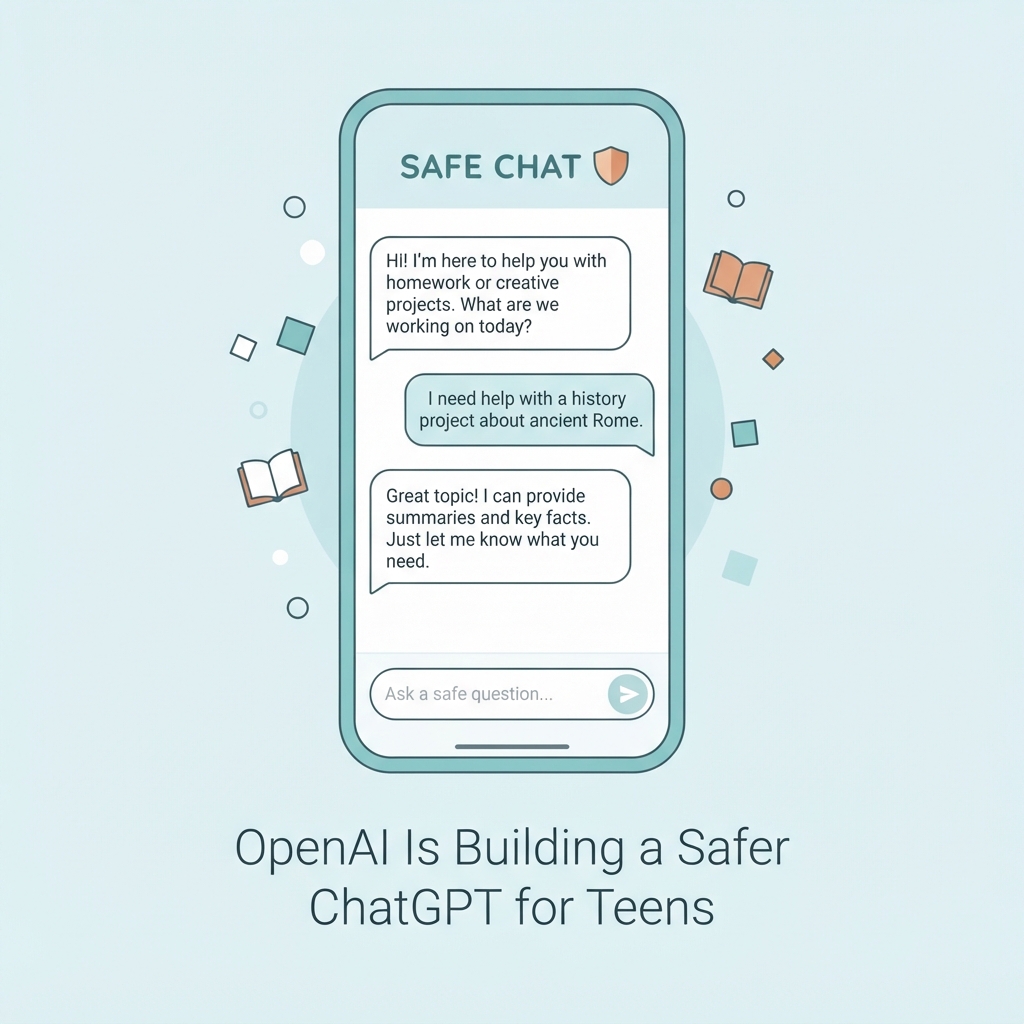
OpenAI has launched ChatGPT for Teens, a version of its chatbot designed specifically for users aged 13–17, with stronger safety protections, parental controls, and learning-focused features.
The biggest change is safety. Teen accounts get stricter limits around self-harm, suicide, violence, eating disorders, and sexual or romantic content. OpenAI is also trying to prevent emotional dependence by instructing ChatGPT not to present itself as conscious, encourage unhealthy attachment, or act like a romantic partner.
Parents can link their accounts to their teen's account, set quiet hours, manage certain settings, and receive safety notifications when conversations indicate serious risks. OpenAI says these alerts are designed to protect privacy rather than give parents access to their child's entire chat history.
The company is also positioning ChatGPT as a learning tool rather than a homework shortcut. Teen users get Study Mode, quizzes, visual learning aids, and homework reminders that can redirect them toward learning instead of simply generating answers.
This is bigger than a new ChatGPT feature. AI companies are increasingly being forced to design products differently for younger users. OpenAI's move comes amid growing concerns about AI dependency, harmful advice, academic cheating, and lawsuits involving chatbot interactions with minors.
It also signals a shift from simply making AI more capable to making it age-aware.
The bigger picture: OpenAI is betting that the future of AI isn't one chatbot for everyone. It may be a collection of experiences tailored to different ages, risks, and use cases—with safety becoming part of the product itself, not an afterthought.